
Last Updated on 4 months
How Winter Tire Tread Patterns Enhance Snow Grip and Winter Driving
To the untrained eye, all winter tires might look the same, but the key difference and critical aspect of winter tires is the tread design. Tire manufacturers have spent decades perfecting tread patterns that ensure optimal grip on snow, ice, and other slippery surfaces. These distinct tread patterns are essential for maintaining safety and control in winter conditions.
This article will explore how winter tire tread patterns improve snow traction, compare various tread types, explain studded tires, and discuss how sipes enhance winter driving performance.
What Makes The Winter Tire Tread So Effective?
The tread pattern on winter tires is engineered to improve traction in challenging conditions like snow, ice, and slush. Unlike all-season tires, winter tires are designed to maintain flexibility in freezing temperatures, providing a firmer grip. The specific arrangement of blocks, grooves, and sipes (tiny slits) on the tire surface contributes to superior traction by creating friction with the road and displacing snow and water.
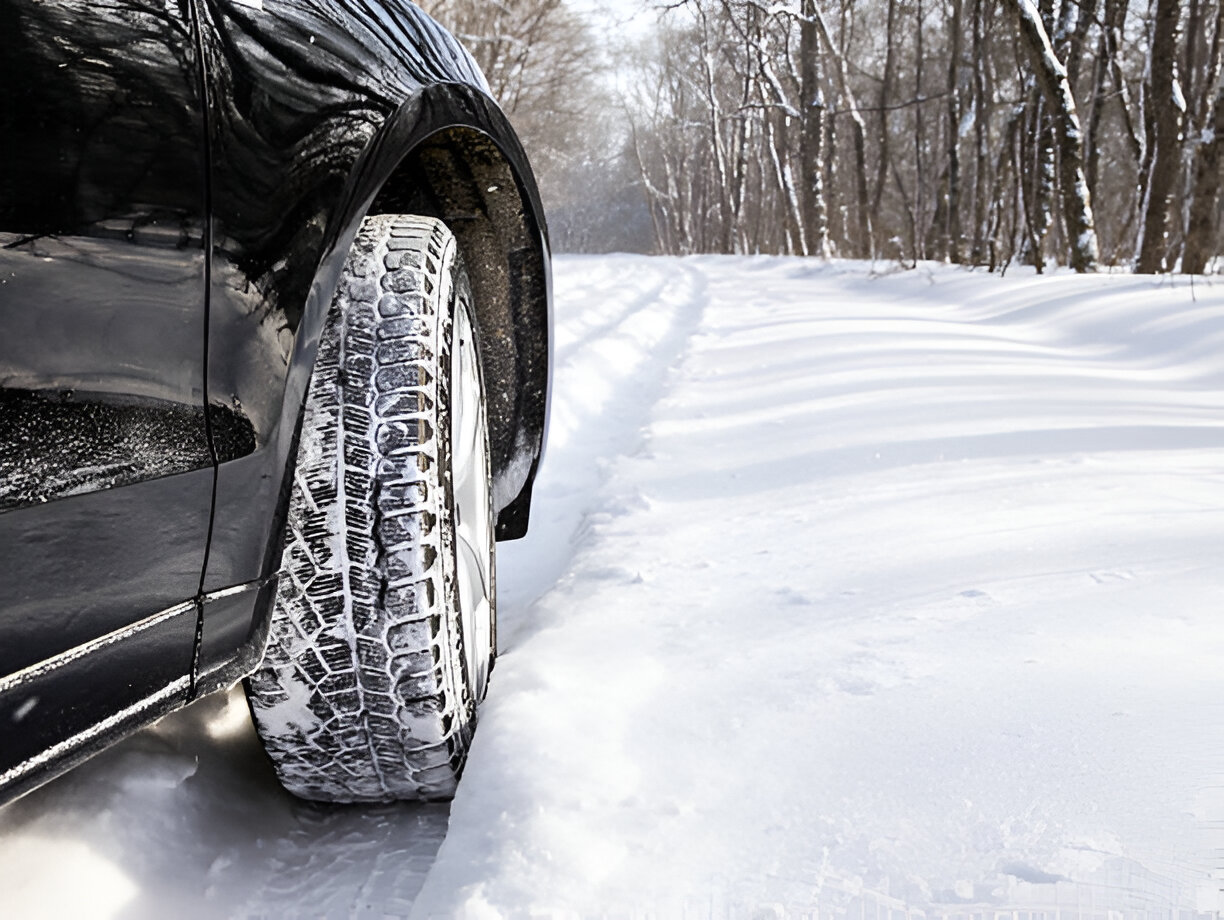
- Deep grooves: Clears snow and slush away from the tire’s surface to allow better road contact.
- Wide tread blocks: The larger surface area of these blocks helps provide more grip on packed snow and ice.
- Increased biting edges: Created by the grooves and sipes, these dig into the snow for improved traction.
- Flexibility: The soft rubber compound keeps the tires pliable in cold temperatures, enhancing grip strength.
Types Of Winter Tire Tread Patterns
1) Directional Tread Patterns
Directional treads feature a V-shaped or arrow-like design that faces one direction. These patterns are engineered to enhance traction in slushy and snowy conditions by efficiently channeling water and slush away from the tire’s contact patch, reducing the risk of hydroplaning.
- Best for: Driving on slushy roads and in heavy snow.
- Advantages: Great for evacuating water and slush; reduces hydroplaning risk.
- Drawbacks: Tires with directional tread need to be mounted correctly; they can only be rotated front to back, limiting rotation options.
2) Symmetrical Tread Patterns
Symmetrical treads feature grooves and tread blocks that are mirrored across the tire’s surface. This uniform design provides a smooth ride with even wear and excellent traction on snowy roads. Symmetrical treads are often found on budget-friendly winter tires.
- Best for: Moderate snow and icy conditions.
- Advantages: Longer tire life due to even wear, more straightforward to rotate.
- Drawbacks: Less effective in extreme snow and slush compared to directional treads.
3) Asymmetrical Tread Patterns
Asymmetrical tread patterns combine different designs on the inner and outer edges of the tire. The inner side typically has more grooves to handle snow and slush, while the outer side has larger tread blocks for improved cornering and handling on icy roads. Asymmetrical tires are versatile and perform well in various winter conditions, making them ideal for drivers who encounter wet and snowy surfaces.
- Best for: Mixed winter conditions, including dry, snowy, and icy roads.
- Advantages: Excellent grip and handling in various conditions.
- Drawbacks: Higher price point and more complicated to rotate than symmetrical tires.
Studded Tires: Enhanced Traction on Ice
One of the most specialized types of winter tires is the studded tire, designed with either plastic or metal studs embedded in the tread blocks. These studs dig into the ice, offering unmatched traction in extremely icy conditions.
Advantages of Studded Tires:
- Superior Grip on Ice: No other tire type offers better traction on sheer ice.
- Improved Braking: Studded tires reduce stopping distance on icy roads, which is crucial in avoiding accidents.
Disadvantages of Studded Tires:
- Noise: The metal studs can be noisy when driving on dry or paved roads.
- Legal Restrictions: Studded tires are not legal in all areas due to their potential to damage road surfaces.
Importance Of Sipes On The Tread Block
Sipes are small, thin slits or cuts in the tread blocks of winter tires that play a critical role in improving snow and ice traction. These seemingly minor features have a significant impact on tire performance.
- Lateral Sipes: Boost traction when accelerating or decelerating.
- Longitudinal Sipes: Enhance stability and handling on snow-packed roads.
- Sipe density: More sipes generally mean better snow and ice performance, but too many can reduce handling on dry roads.
What Is The Best Tread Design For You?
- Snow Traction: Directional and asymmetrical treads are ideal for snow and slush, with directional treads specializing in water evacuation and asymmetrical designs offering better handling on snow and ice.
- Ice Performance: Studded tires offer the best traction on ice, but sipes can also improve grip. However, sipes alone won’t outperform studded tires in extreme conditions.
- Hydroplaning Resistance: Directional treads excel in wet conditions, while asymmetrical designs balance traction and cornering stability.
- Handling: Asymmetrical treads provide superior cornering and overall handling, especially in varying winter conditions, while symmetrical designs offer solid all-around traction.
Conclusion
Selecting the right winter tire tread pattern is key to optimal performance and safety in winter conditions. Whether navigating icy city streets, packed snow in rural areas, or slushy highways, a winter tire with the perfect tread design keeps you safe and in control. Directional, symmetrical, and asymmetrical tread patterns each have their strengths, ensuring that you stay safe and in control, no matter the weather.